

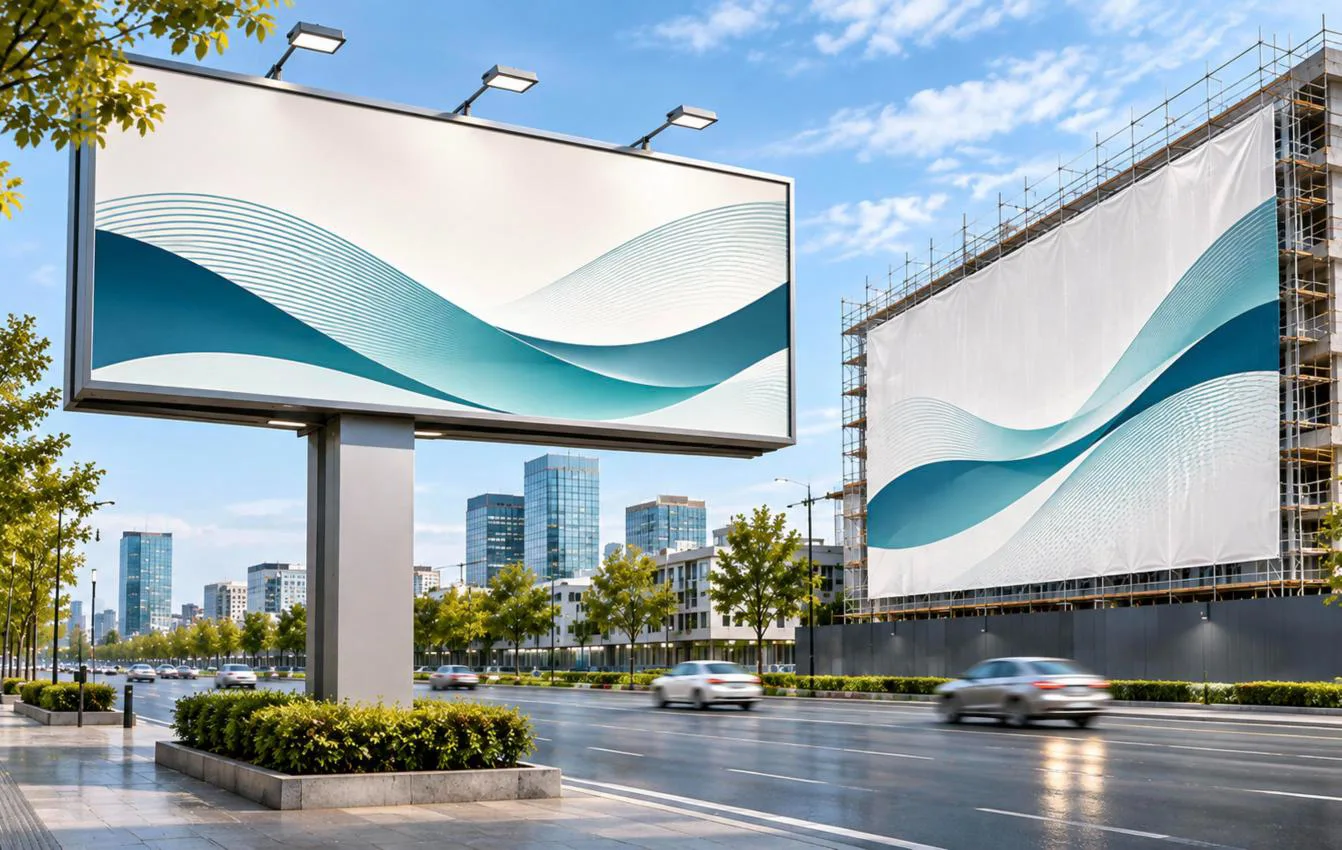
Choosing between billboard printing, a tensioned mesh banner and vinyl banner printing comes down to wind load, viewing distance, how long the print will stay up and the structure of the facade. With a side-by-side comparison table, we explain which option fits which situation.
In large-format outdoor printing, the material is chosen based on the wind load the installation will face, the viewing distance, how long the print will stay up and the surface it will be mounted on. Billboard printing is generally the right choice for standard advertising billboards; a tensioned mesh banner, thanks to its perforated structure, suits high, wind-exposed facades and scaffolding; and vinyl banner printing works best on surfaces that will be seen up close and face limited wind. Below, we walk step by step through the situations where each option stands out.
What is billboard printing, and when should you choose it?
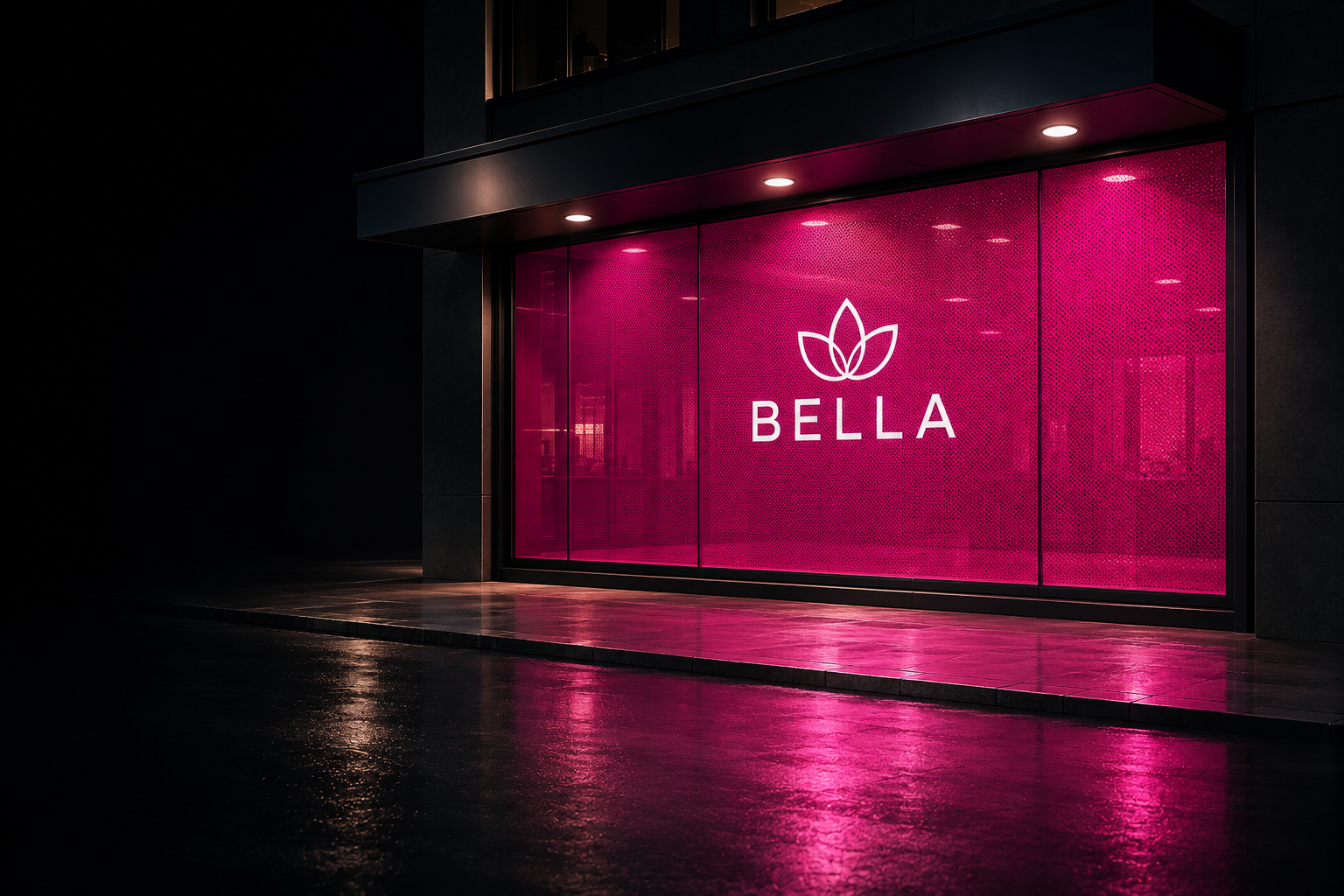
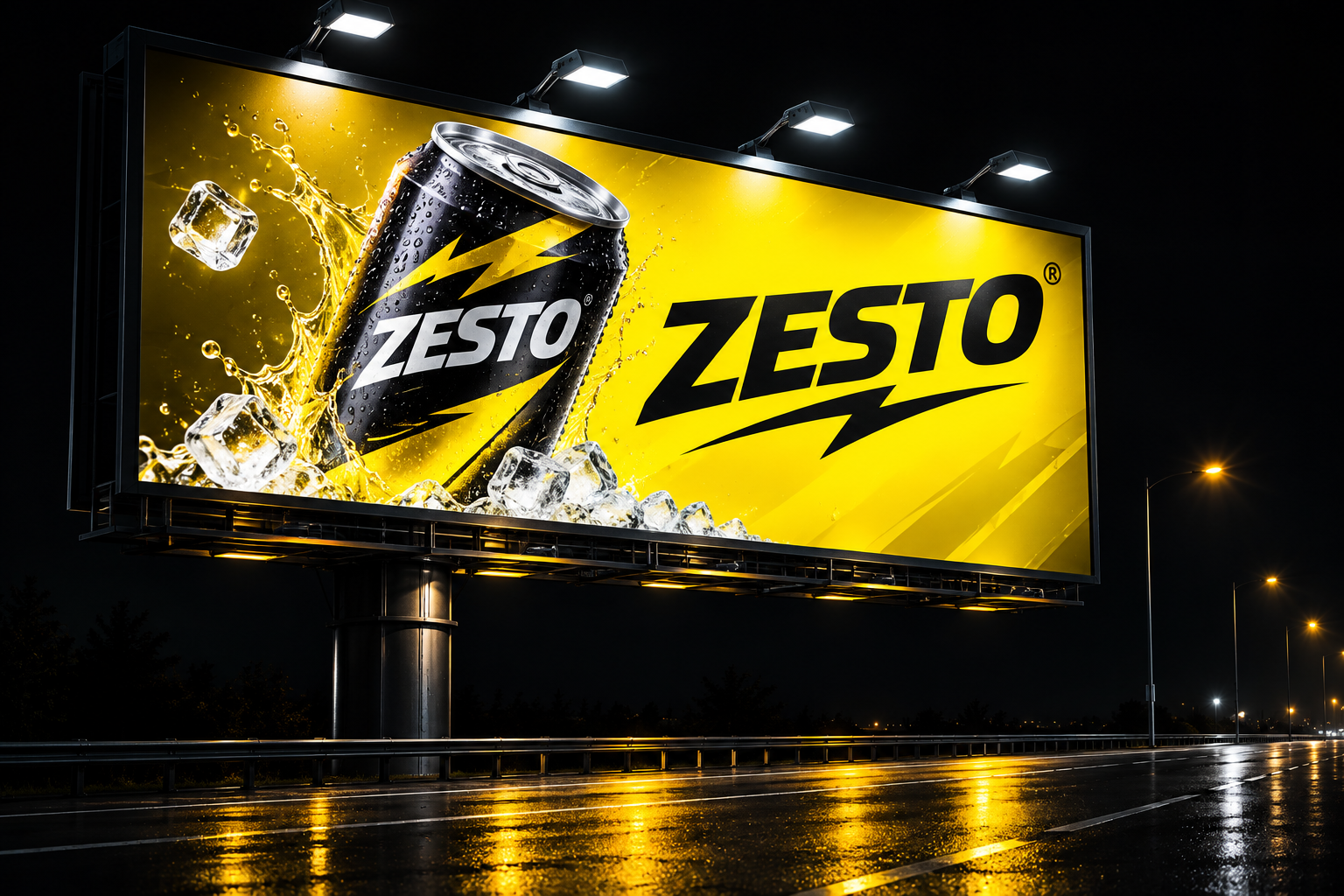
Billboard printing is large-format printing produced for the standard advertising billboards found along roadsides and in public squares. A billboard is an advertising format rather than a material; the print is produced on a material suited to the structure of the billboard. Because the billboard size is fixed in advance, the design is built around that size, and the print is either tensioned onto the billboard or fixed in place. Billboards are ideal for campaigns that want to reach a large number of people in a short time on routes with heavy vehicle traffic. Since viewers are usually on the move, a billboard message must be understood within a few seconds.
When is a tensioned mesh banner used?
Mesh is a net-like print material covered with many small holes that let part of the wind pass through. This property reduces the wind load on the surface. That is why mesh is preferred especially in the following areas:
- High building facades and building wraps,
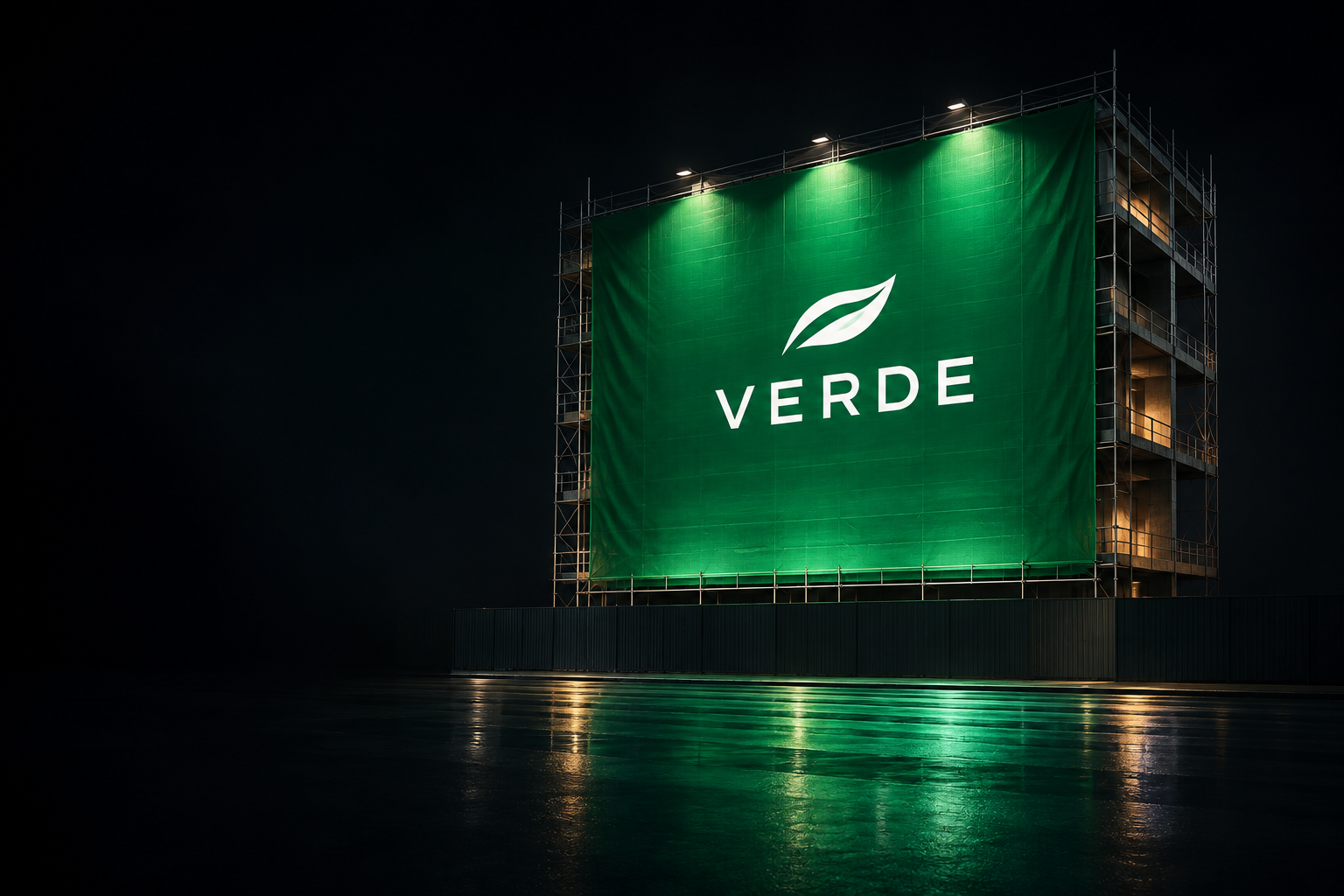
- Scaffolding covers on buildings under renovation,
- Wind-exposed open land, construction site perimeters and stadiums,
- Very large surfaces that will be viewed from a distance.
The perforated structure of mesh can make the print look slightly less saturated up close; viewed from a distance, however, the image stays visually cohesive. Mesh can be tensioned onto a frame as a tensioned mesh banner or fixed directly to the facade.
When is vinyl banner printing the right choice?
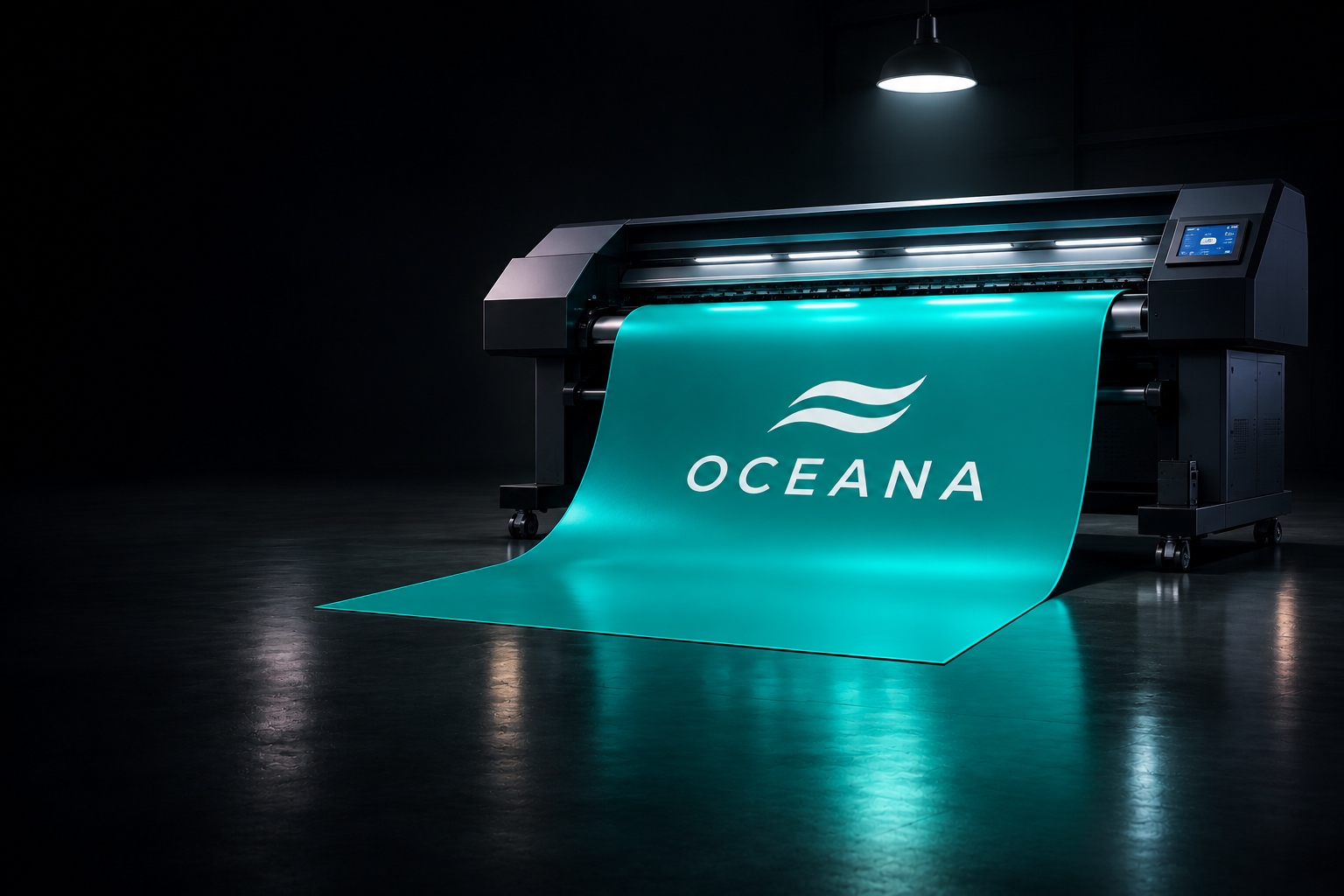
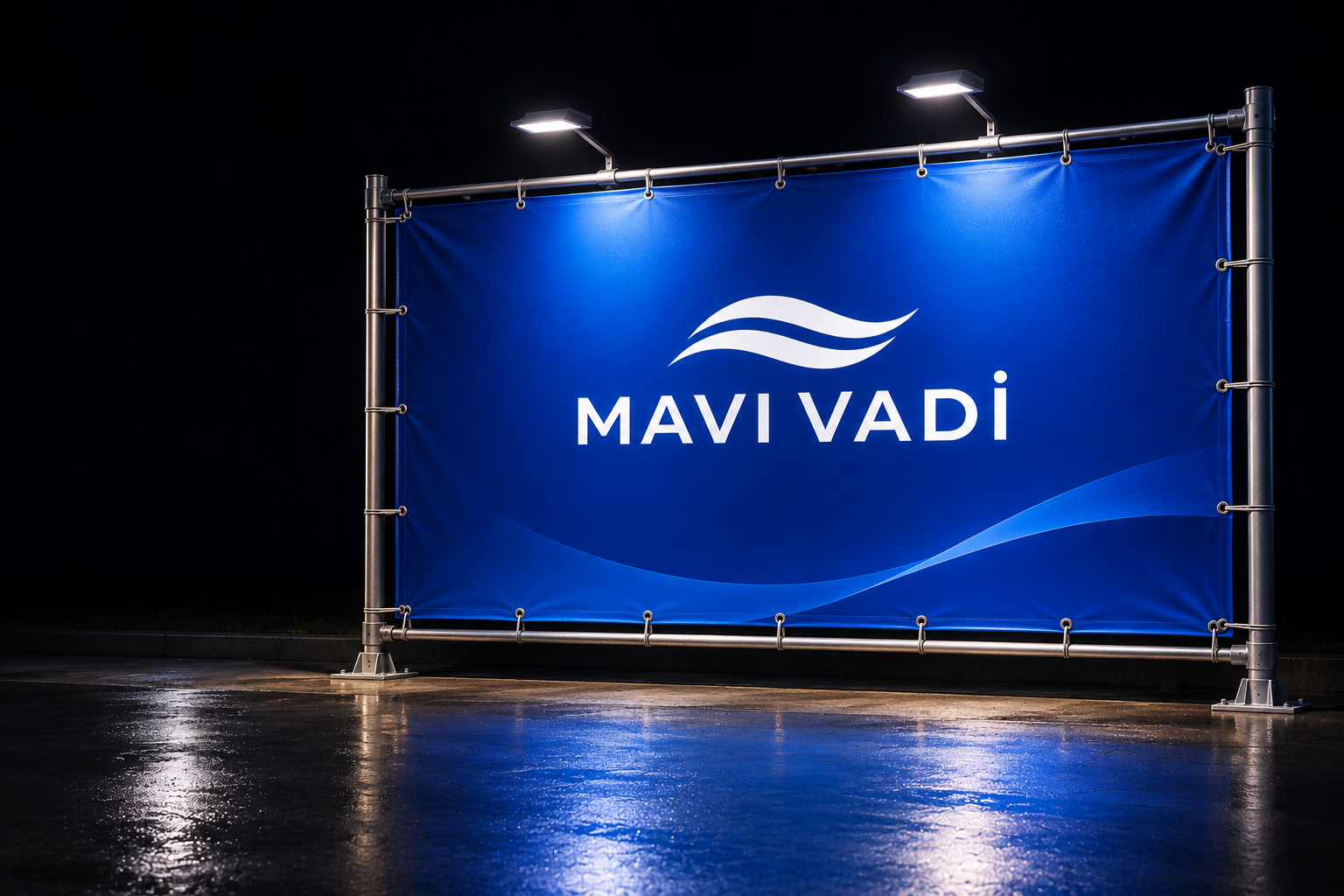
Vinyl banner printing uses a durable, waterproof material with a solid, closed surface. Vinyl shows colors vividly and richly, and it stays sharp even when viewed up close. A vinyl banner can be hung with reinforced edges and grommets, or tensioned onto a frame to become a tensioned vinyl panel. Vinyl suits storefronts, grand opening and campaign announcements, event venues, construction site signs and medium-sized surfaces with limited wind exposure. Because its solid surface catches all of the wind, a vinyl banner at large sizes and in wind-exposed locations requires a sturdy support structure and the right tensioning detail.
Billboard vs. mesh vs. vinyl: a side-by-side comparison
| Criterion | Billboard printing | Tensioned mesh banner | Vinyl banner printing |
|---|---|---|---|
| Wind resistance | Depends on the support structure of the billboard | High; the perforated structure reduces wind load | The solid surface catches the wind; firm tensioning is required |
| Viewing distance | Medium to long; mostly vehicle traffic | Long; high facades and large areas | Short to medium; pedestrian and street level |
| Appearance | Campaign-focused, clear and simple | Cohesive from a distance, less saturated up close | Vivid colors, sharp even up close |
| Typical use | Roadside advertising billboards | Building wraps, scaffolding covers, stadiums | Facades, grand openings, events, construction site signs |
| Installation method | Based on standard billboard size | Tensioned onto a frame or fixed to the facade | Hung with grommets or tensioned onto a frame |
What questions should you ask when choosing?
How much wind will the installation face?
If the installation is at height, in an open area or in a wind corridor, mesh should be the first option to consider. On surfaces close to ground level with limited wind, vinyl delivers a more vivid result.
From what distance will the print be viewed?
The farther away a message will be read from, the larger the lettering and the shorter the copy should be. Surfaces viewed from a distance do not need print resolution as high as close-range prints; image quality and color contrast, however, matter at every distance.
How long will the print stay in place?
A campaign that runs for a few weeks and a building wrap that will stay on a facade for months are not planned the same way. In long-term installations, material quality against sun, rain and wind, edge reinforcement and the support system become even more important.
Are the facade structure and permits suitable?
If the facade has windows, balconies or ventilation openings, mesh can offer an advantage because it partially lets light and air through. For advertising installations on building facades and in public spaces, municipal regulations and the approval of building management should also be checked separately.
Will the print need to be visible at night?
On illuminated billboards, the print is usually front-lit with floodlights; in some systems, the light comes from behind. Backlit installations use special print materials that let light through, while front-lit surfaces can use materials that reduce glare. The lighting system should be known before printing so the print material can be chosen accordingly.
Why do installation and safety matter?
In large-format projects, installation is at least as important as printing. High facade and scaffolding installations should be carried out with suitable equipment and occupational safety measures; tensioning points and fixings should be checked regularly, especially in long-term installations and after severe weather.
Design tips for large-format printing
- A single key message, a strong visual and legible brand information are often enough.
- On surfaces that will be read from a distance, avoid thin typefaces and small details.
- Account for grommet, tensioning and fold allowances from the start; keep important information away from the edges.
- Prepare the print file in proportion to the actual size and with print-ready color settings.
Large-format outdoor printing with ERD Reklam
ERD Reklam assesses your installation site with an on-site survey and measurements, helps you choose the right material for its wind, distance and duration conditions, and plans design, printing and installation together. For examples, browse our Billboard Printing, Tensioned Mesh Banners and Vinyl Prints categories, or fill out the quote request form with your size and location details.
- #billboard printing
- #tensioned mesh banner
- #vinyl banner printing
- #mesh vs vinyl banner
- #outdoor advertising
- #large-format printing
- #building wrap
Frequently Asked Questions
What is the difference between mesh and vinyl banners?
The key difference is the surface: mesh is perforated, while vinyl is solid. Mesh lets part of the wind pass through and reduces wind load on high facades. Vinyl, with its closed surface, shows colors more vividly and looks sharper up close, but because it catches all of the wind, a vinyl banner requires firm tensioning and a sturdy support structure.
Which material is best for a building wrap?
Mesh is generally the preferred material for building wraps on high, wind-exposed facades. Vinyl can also be used on low, sheltered surfaces that will be seen up close; the final decision is made during the on-site survey after assessing wind conditions, size and the support structure.
What should you keep in mind when designing a billboard?
Keep a billboard design simple enough to be understood in a few seconds. A billboard is mostly seen from moving vehicles within a few seconds, so it should use a single key message, large high-contrast lettering, a strong visual and easy-to-remember brand information.